
En garde! Fencers carry the sword for Newington
As our sabre and foil fencers gear up for their first competitive bout this weekend, we catch up with Captain Dylan H to hear why brandishing a sabre is so satisfying.
Most evenings and mornings before school, Concordia (across the road from the Senior campus in Stanmore) is bustling with activity as students from Years 7 to 12 warm up, don their face masks, and practice lunging with their weapons. Multiple bouts swiftly spring in action around the room, with blades flashing through the air at lightning speed.
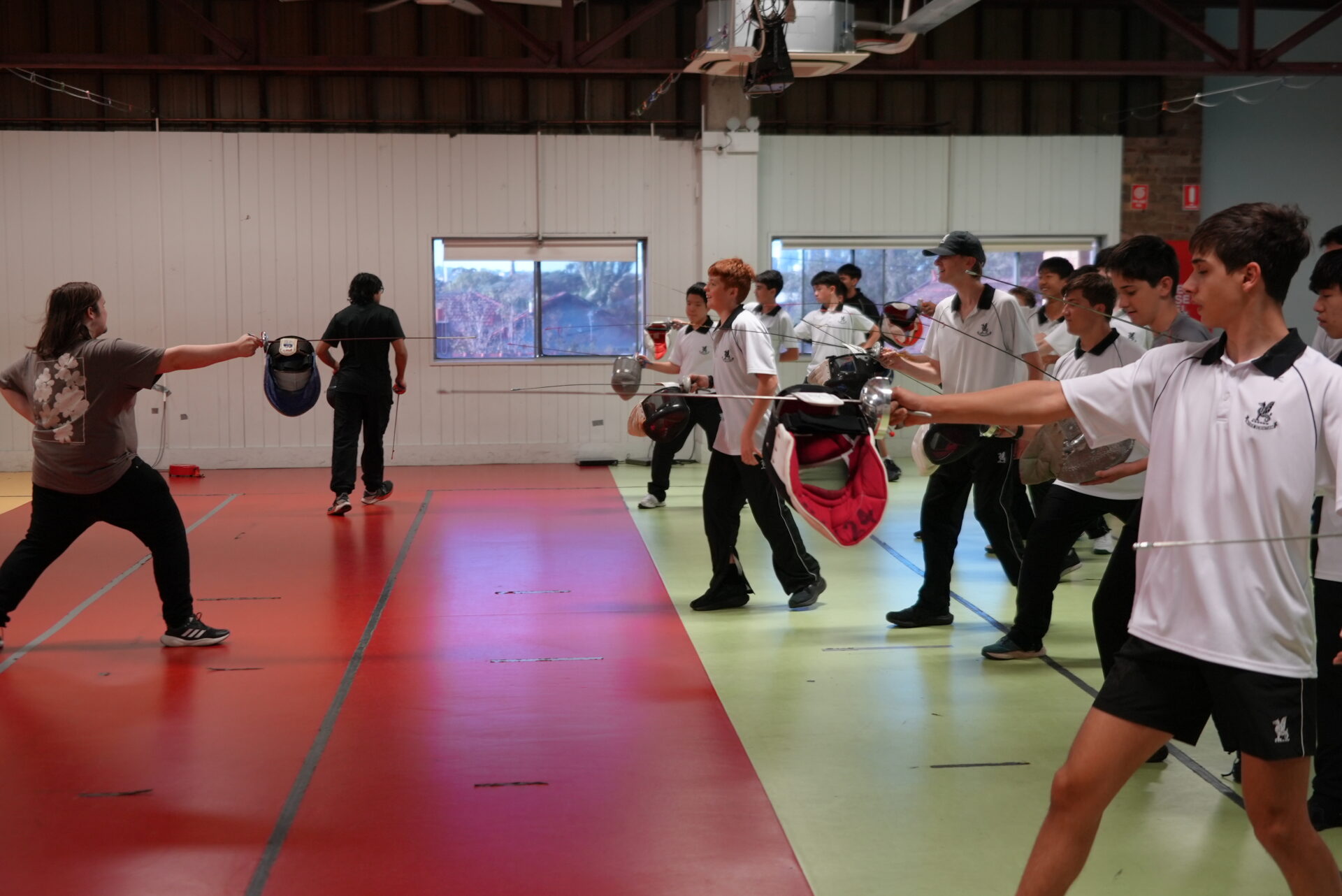
For Year 12 student Dylan, who first began fencing in Year 7, the lure of the sport, which sees two competitors battle it out in combat, was too strong to resist.
‘I just thought it looked so fun. I mean, you get to duel other people,’ he says.
‘It’s also a very nuanced sport – there are many different rules, and it depends on which weapon you’re using as to how you score points.’
Around 65 students currently participate in Newington’s Fencing Program, and each of these duellers has selected one of three weapons with which to train twice per week and compete on Saturdays: epee, foil, or sabre.
Dylan opted to learn sabre, the most popular choice for Newington fencers, when he first took up the sport. The sabre is the shortest of all three weapons, and the wielder can accumulate points by touching their opponent on the head, torso and upper body parts (excluding hands) with either the tip or side of the blade. Points are registered by electronic equipment attached to competitors. In individual bouts, the first to 15 points wins.
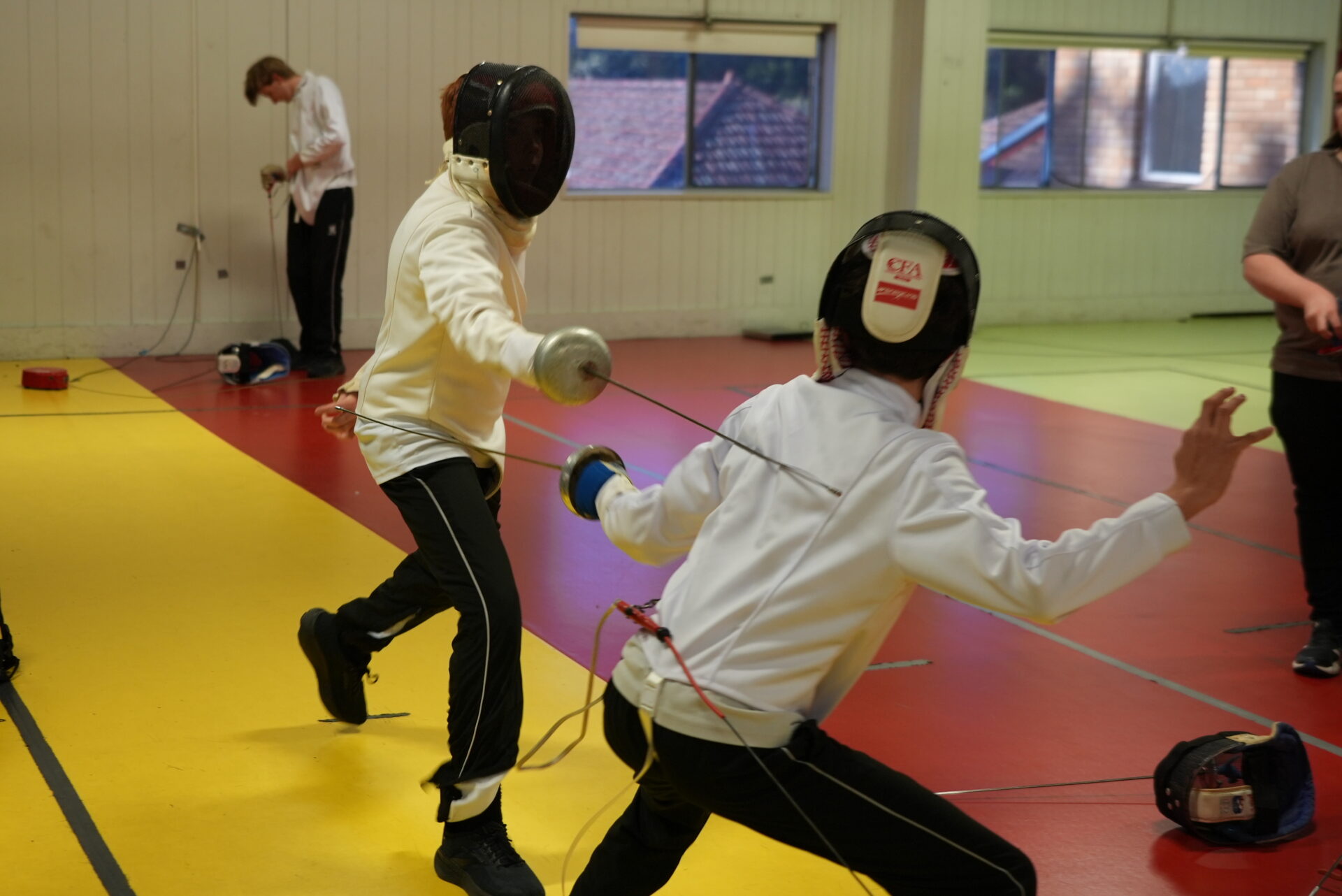
‘Sabre is the most fast-paced weapon, so it’s very dynamic because your reaction speed is the thing that determines who will win the point,’ Dylan explains.
‘You also have to be able to adapt to what your opponent is doing at the same time as you, so I enjoy that aspect of it.’
This weekend our fencers will participate in the NSW Fencing Association’s esteemed Roberta Nutt Shield, held at Sydney Olympic Park. Named after the mother of Australian fencing champions Abigail and Nigel Nutt, the competition was first established in 1992 and serves as a foundational tournament for NSW school fencers. The Shield is awarded based on individual points in senior and intermediate grades.
Saturday’s round will feature bouts within the U16 and U19 division in foil and sabre weapons. Dylan, who will compete in the U19 division, says he is looking forward to flexing his skills.
‘It’s always great to go up against new opponents and challenge yourself,’ he says.
And according to Miss Annie Cao, Newington’s Director of Fencing and Maths teacher, our competitors can certainly hold their own.
‘Newington usually performs very well at a competitive level, particularly in the sabre category,’ she says.
‘We’re certainly looking forward to seeing some nail-biting bouts of fencing during the Shield, which attracts students from both independent and public schools across Sydney.’
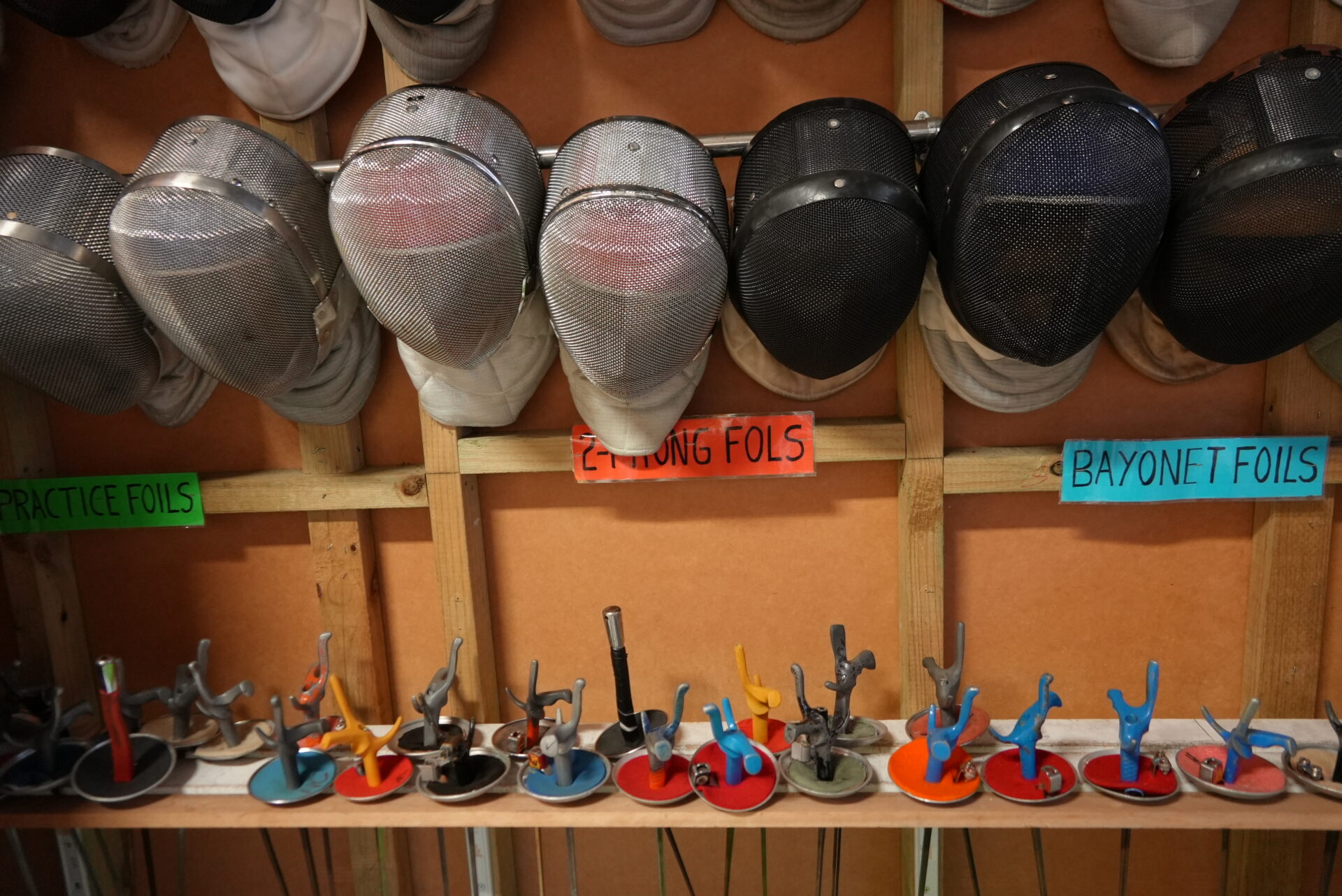
Whether students are keen to be involved in external competitions or not, Miss Cao encourages all to come along and give fencing a try.
‘You don’t need any prior experience, just come along and see what it’s all about,’ she says.
Dylan agrees.
‘It’s really fun – it might take a while to get the hang of some of the skills, but once you’ve done it for a season, you’re pretty much set to just be able to continue on and keep improving,’ he says.
‘And the further along you get, the more fun it becomes!’
To read more about fencing at Newington, visit ‘Exploring the pointy end of Newington’s Fencing program’.
Did you know?
- Newington students compete in a range of winter sports including AFL, athletics, cross country, fencing, football, New Fit, rifle shooting, rugby, snowsports, tennis and volleyball.
- Newington is the only GPS school to field a 1st and 2nds team in six GPS sports, including rifle shooting.
- Fencing is one of only four modern sports to feature in every modern Olympic Games since 1896.
- Fencing suits are white because before electronic scoring, touches were recorded with a piece of cotton dipped in ink.