
Tackling the complexities of ethical decisions
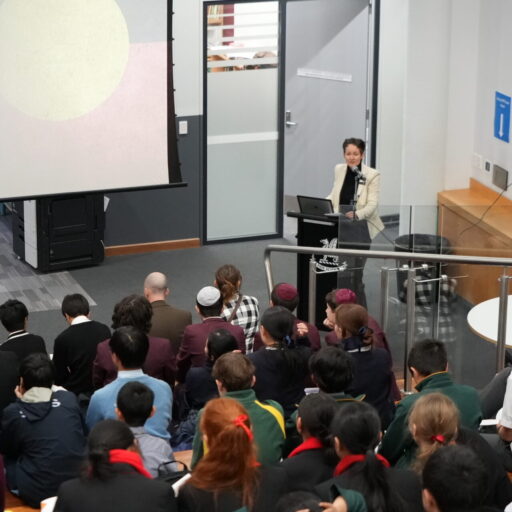
Students received some hands-on gaming help in Year 10 Philosophy and Religious Studies (PRS) recently to investigate some prickly ethical dilemmas.
Philosopher and social reformer Jeremy Bentham was a proponent of classical utilitarianism. Writing in the UK in 1789, Betham argued ‘the greatest happiness of the greatest number … that is the measure of right and wrong’. Actions, he maintained, should be judged to the extent they increase or decrease pleasure or pain, or what he termed ‘utility’.
As Year 10 Philosophy and Religious Studies students began to investigate and understand ethical theories, Mr Andrew Costantino, Head of Philosophy and Religious Studies, and teachers, Mr Ivan Kenneally and Mr Jason Nowland, used a tabletop card game called ‘Treat or Not Treat’ in Bentham’s Hospital, to illustrate the principles of utilitarianism, and its inherent moral dilemmas.

‘The whole purpose of the game is to test the limits of utilitarianism or that idea that the right thing to do is the thing that maximises pleasure and minimises pain, and that all pleasure and pain should be treated equally,’ says Mr Costantino.
Students were put in teams and became fictional members of the Board of Ethics at Bentham’s Hospital. Each team was given a budget of $64,000 to last across three rounds, with each round comprised of eight fictional patients who required urgent medical treatment. Students had to decide which patients, to treat, or not treat using Bentham’s principles as a guide.
‘The principle is that ‘one should act to maximise pleasure, minimise suffering and all pleasure and suffering must be considered equally, no exceptions’,’ says Mr Costantino.
Points were added and deducted from the teams based on their choices under time pressures, and the winner was the team which most efficiently maximised utility.
Teaching students to think ethically and critically is a cornerstone of Newington’s learning and teaching framework. In this lively example of engaged learning, Mr Costantino says students came to realise that while utilitarianism is intuitively appealing, it is not as simple as it seems, and can also have some profoundly uncomfortable implications.

‘What the game shows is some of the shortcomings of utilitarianism in that you can’t predict consequences,’ Mr Costantino says.
‘Also, the quantification of pain and pleasure seems arbitrary because it is hard to imagine how one could quantify different types of pleasure on a single scale with any degree of certainty or precision. Also, strict utilitarianism requires us to put aside any special obligations – whether those obligations are to our own wellbeing or to the welfare of the ones we love – because, according to Bentham, everybody is to ‘count for one, and nobody for more than one’.
‘One of the questions posed to students asks, do you agree to a fur replacement surgery on a dog that millions of people love on social media or restore the sight of a human who is quite isolated and not very loved? If enough people get pleasure from the dog, the true Benthamite would have to concede that at some point the fur replacement would ultimately ‘maximise pleasure’ and thus be ‘the right thing to do’.
Mr Costantino explains that strict application of Bentham’s principles means pleasure maximisation must be prioritised over deeply held moral duties, like a commitment to respect fundamental human dignity. Utilitarianism runs the risk of marginalising minorities, and the vulnerable, through the aggregation of pleasure, and it can lead to what philosophers call ‘a repugnant conclusion’.
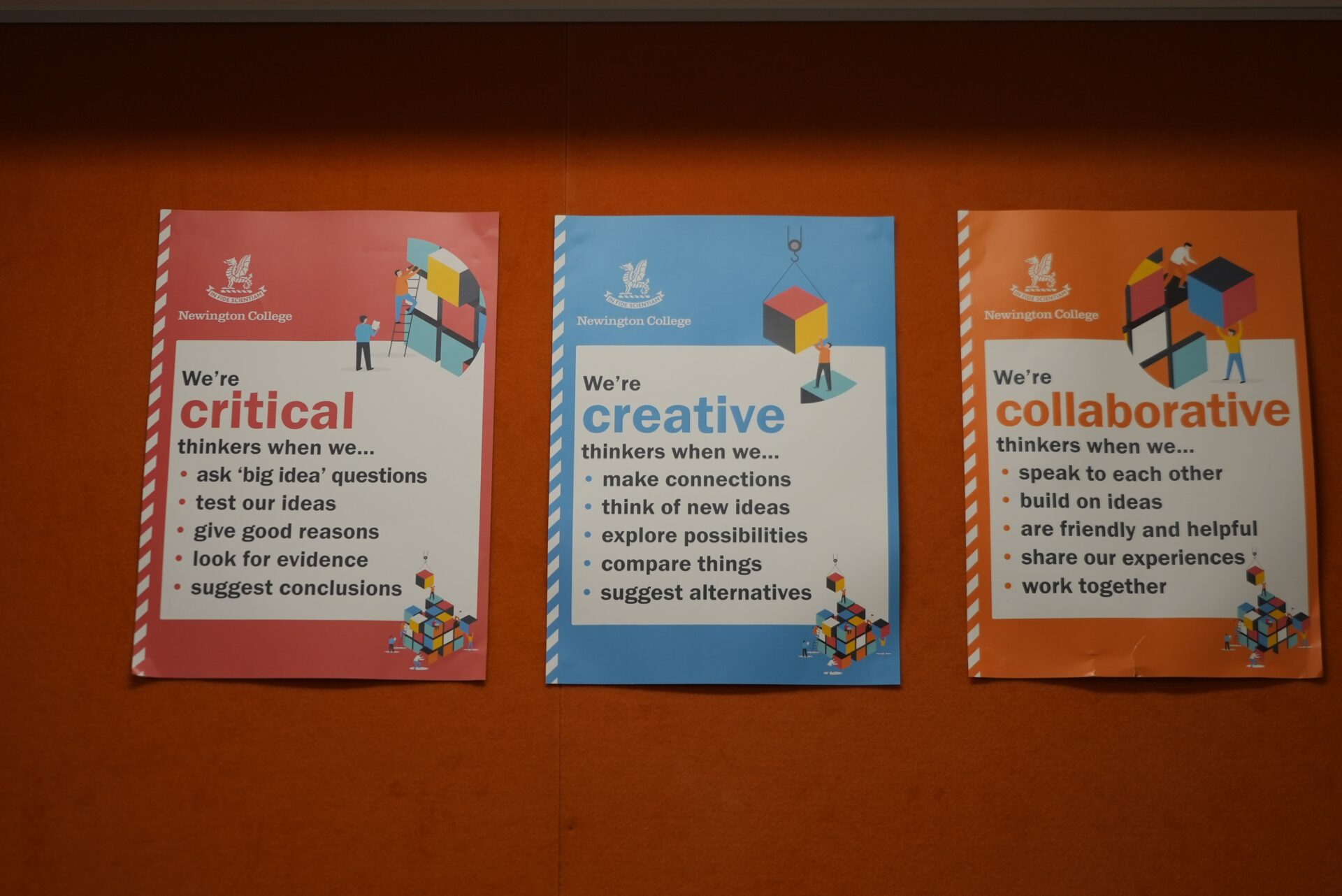
Dilemmas like these highlight a central challenge in ethics: whether moral decision‑making should be guided primarily by outcomes and consequences, or whether some duties and principles should constrain what can be done – even in pursuit of good results.
Reinforced with lessons on theory too, these hands-on sessions are a powerful means of introducing Year 10 Philosophy students to thinking about the complexities of ethical decision making, responsible citizenship and living a good life, says Mr Costantino.
‘Key to this is teaching our students how to improve the quality of their reasoning, and their understanding of the factors that influence it.’